The Assetizer · 27 August 2026
What Institutional Investors Really Want From Crypto
We talk to Florian Marty, Managing Director of GenTwo Digital, about bringing modern risk-management tools to crypto investing, and crossing the last mile of institutional crypto adoption.
This newsletter is part of The Assetizer, GenTwo's thought leadership platform.
Hello everyone,
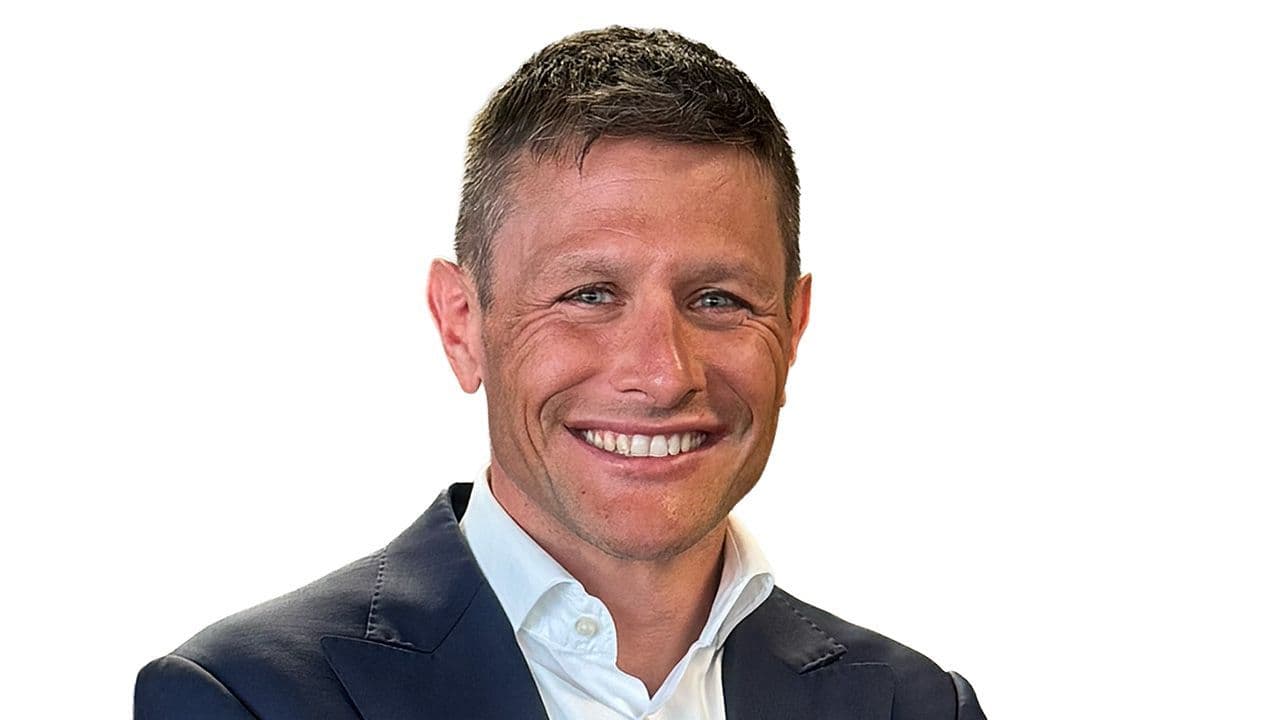
In this edition of The Assetizer, I am talking with Florian Marty, who recently joined us as Managing Director of GenTwo Digital. That makes him responsible for our digital assets business.
He is also working with me to put together our upcoming Structured Products on Digital Assets Summit. (You can learn more about that here, and sign up here.)
From robots to reverse convertibles
Florian joined us from Bank Vontobel, where he led the bank’s DLT and crypto initiatives. Before that he was heavily involved in Deritrade, Vontobel's structured products platform, which was invented by GenTwo co-founder Patrick Loepfe. (You can listen to my podcast with Patrick here.) Earlier in his career he was at Boston Consulting Group. He also, I discovered when reading his bio, holds a master's in Micro Technology. That means that, alongside being an expert in finance, he knows how to build robots.
One of the first things Florian did after arriving was write our Structured Products on Digital Assets report, which you can find here and which I wrote about in The Assetizer here. In it, he sets out the investment case for digital assets and the barriers still standing in the way of full institutional adoption. That seemed like a good place to start.
Winter garden
Florian, the big story in crypto over the past two years has been mainstream adoption and regulatory clarity. But digital assets continue to be their usual volatile selves. For someone looking back over the past twelve months and seeing Bitcoin down almost 30%, what do you say about the market?
I'd say look at what is happening away from the price. While bitcoin ETFs saw heavy redemptions in this latest crypto winter, institutional money stayed. Cumulative net inflows have remained positive despite the price drops, and more than 70% of institutional investors say they plan to increase digital asset allocations in 2026.
We see the same thing in our own business, where the appetite is strongest among wealth managers, family offices, and others sitting close to end clients. The problem, which we discuss in the white paper, is that there is a gap in the crypto product offering for investors who are not crypto natives. We still need to bridge the last mile to real adoption. That is one of the things I am trying to help with in my role at GenTwo.
So what is getting in the way? What do we need to cross that last mile?
In a word, risk management. Right now the only way to access crypto without owning coins directly is through products like ETFs, and that is raw spot exposure. It is not what sophisticated investors are looking for. They want the full palette of risk-management tools they are used to in traditional finance. That means structured products with asymmetric payoffs, which in plain terms are instruments with clearly defined outcomes based on clearly defined conditions. They can for example deliver yield in flat markets, downside protection in volatile ones, and ways to express a view on a market without holding the coins.
That last point deserves more attention than it usually gets. There is a whole set of investment managers who would like crypto exposure and are not permitted to hold the assets directly. Structured products can get them that exposure.
What's in the box
What would such products look like? Do you have any examples?
In the white paper I set out four common structured product types that suit crypto particularly well.
There are capital protected notes, where an investor participates in the upside of a digital asset while all or most of the principal is protected at maturity. That is a good choice for someone cautious about the market or allocating for the first time.
There are dual currency notes, where the investor receives an enhanced coupon in exchange for the possibility of redemption in a second currency or asset at a pre-agreed rate. That suits treasuries and yield-seeking allocators, and in practice anyone who has already decided the level at which they would buy or sell.
Then there are barrier reverse convertibles, which pay a fixed coupon and return full principal provided the underlying stays above a defined barrier. If it breaches, the investor takes delivery of the asset. This can be used to monetize crypto volatility directly.
And there are also discount certificates, where an investor buys exposure to a crypto asset at a discount to its current price in exchange for a cap on the upside. This can be appealing to those with a neutral to moderately bullish view.
This all sounds very theoretical. Do such products already exist? Can you give some concrete examples?
Sure. We are about to launch two new products with a partner of ours that are illustrative. Both are on Bitcoin.
The first is a barrier reverse convertible. The term is three months and it pays a fixed coupon of 20% per annum, which the investor receives whatever happens. What they accept in return is a level on the downside. If Bitcoin has fallen past it at maturity, they take that fall. If it has not, they get their money back plus the coupon.
The second is a capital protected note. Here the term is nine months and there is no coupon, but the investor gets a floor. Whatever happens to Bitcoin, they get most of their money back. In exchange they take part of the upside rather than all of it.
These are just two of a number of examples I could have named. The important thing is that such types of products are becoming more common in the digital assets space. And that I think is a very good sign.
That may be a good sign, but in the white paper you are very clear that there is a large gap in the market right now. So why haven't we seen more of this?
Because there are still some constraints on the supply side.
Take banks, the traditional manufacturers of structured products. In Europe, the Basel rules impose onerous capital requirements on crypto holdings, with risk weightings as high as 1250%. That makes issuing these products uneconomical.
For an asset manager the obstacle is different. What is missing is a straightforward way to package a sophisticated crypto strategy into something clients can actually buy.
As we write in the white paper, asymmetric structured products like those I described, as well as instruments like AMCs, can be used to help get over these hurdles. This is where the future of this market lies. And it’s what we are working on at GenTwo.
Last question: you and I are gearing up for our Structured Products on Digital Assets Summit in September. Why should Assetizer readers sign up?
In a word: depth. Our program is filled with practitioners who will really dig into the details of how such products get made, how the market for such products works, the real state of tokenization, just a lot of interesting subjects. It’s definitely geared for those who want to see how this works from the inside.
Attend the GenTwo Structured Products on Digital Assets Summit
Join us September 7 to 11 for a five-day online summit bringing together leading experts from across the digital asset ecosystem. Sessions cover market structure, institutional investment solutions, tokenization, and how these products actually get built. Attend individual sessions or register for the full Summit, live or on demand.
Register here.