The Assetizer · 17 July 2025
This Ain’t No Crypto Part 2: Stablecoins And The Rejigging of the Global Financial Rails
Stablecoins seem to be the missing link in the adoption of blockchain for payment and other financial rails. New rails will mean new, and better, ways of doing business.
This article is part of The Assetizer, GenTwo's thought leadership platform.
Last week I wrote about stablecoins, which have become a fairly hot topic lately. And as promised I’d like to continue the theme along a number of posts.
In this one I thought I’d look at the infrastructure story. In this one I thought I’d look at the infrastructure story. From an Assetizer point of view, there are three subplots worthy of attention:
- What stablecoins are and why their adoption paves the way for large-scale blockchain-based financial plumbing
- How blockchain-based financial plumbing can make operating financial firms easier (in later posts we will talk about business opportunities)
- How financial regulation is shaping the adoption of stablecoins (spoiler alert: it’s the main catalyst now)
Let’s get into it.
Understanding Stablecoins
If you’ve been following blockchain technology you probably know what stablecoins are.
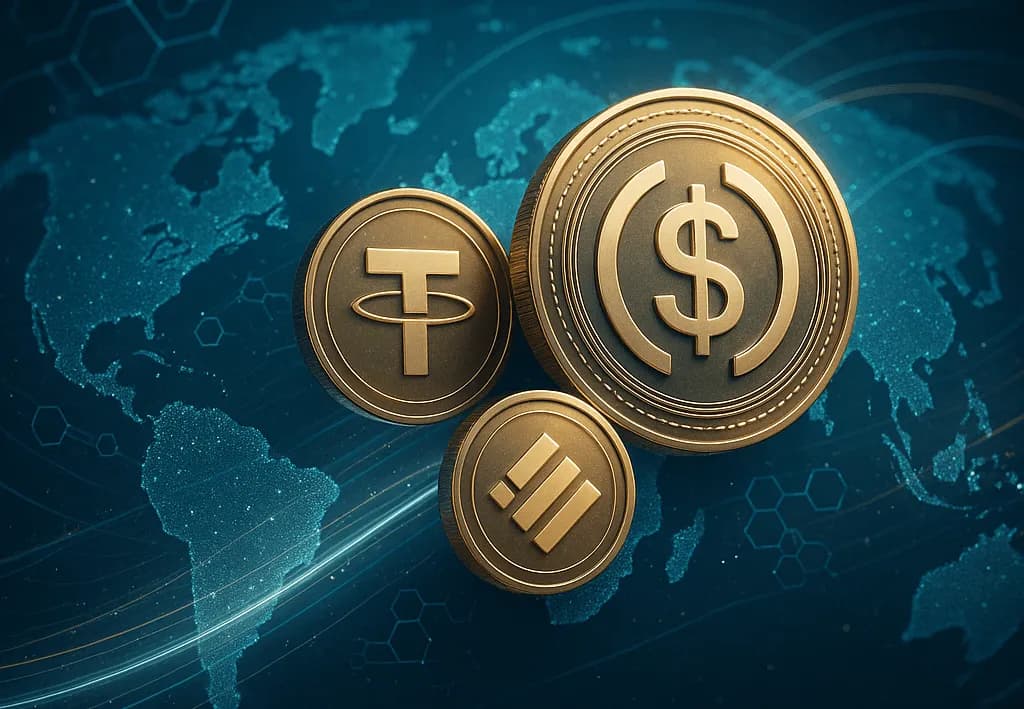
If not, you can think of them as tokenized representations of fiat currencies – basically digital versions of real money. That’s very different from cryptocurrencies, which are (or would like to be) digital forms of money, but not government-backed fiat currency.
The point of a stablecoin is that it is supposed to be stable: the token should represent 1:1 what the underlying currency is. One USD Coin equals one US dollar.
So far so good.
The difficulty of getting fiat money on chain in a way that is widely accepted and compliant has been one of the main blockers for the wide-scale adoption of blockchain for financial infrastructure.
The technology here is not the issue. Stablecoins have been around for a long time. But they have existed in a regulatory grey-zone.
Now that that blocker is being removed, the path is open for blockchain-based payments and other infrastructure on a large scale.
I won’t go into more detail here. This is very familiar ground, and there are plenty of good resources out there to help you get into the weeds. In fact, here is some recent reports and papers I can recommend:
- Money Movement 2.0 by Marc Baumann and friends at fiftyone.xyz. Covers the whole space nicely.
- Stablecoins in Banking: Strategic Insights from the 2025 Survey by Fireblocks surveys banks, and shows how, indeed, adoption is fairly far along.
- And here a nice skeptic turned believer story by a lifelong payments professional.
Streamlining Operations
So now to the “why should I care” part.
Since it came on the scene, blockchain has been touted as a means to upgrade the world’s financial infrastructure in a big way. And as I mentioned last post, banks have known this for almost a decade. And they have been pecking away at the problem for that whole time.
But without a clear pathway to full compliance, most of those projects remained safely tucked away in a drawer somewhere, waiting for a moment like this one.
A distributed ledger, at least in theory, has a lot to offer when it comes to moving money around. I’d argue that its benefits derive from two main attributes:
- Immediate settlement through peer-to-peer transactions
- Programmable money through smart contracts
On this basis, you can derive any number of business benefits. Here’s a nice list my friend Perplexity came up with:
- Less friction globally: Money flows smoothly across borders, making it far easier to serve international clients or operate global strategies without complex bank arrangements or currency uncertainty. New investment markets and trading partners become more accessible, leveling the playing field for smaller or independent managers.
- Better use of capital: Funds are available to redeploy or distribute the instant a trade or redemption is executed. No more waiting for slow settlements or uncertain bank cutoffs.
- More automation: Activities like investor subscriptions/redemptions, distributions, and conditional events (e.g., milestone disbursements) can be executed automatically, reducing manual intervention and error.
- Lower transaction costs: Cutting out banks and intermediaries lowers fee drag on every transaction (including FX and global transfers), directly benefiting client returns and manager profitability.
- Lower compliance costs with higher transparency: Transactions are recorded on digital ledgers, making audits, investor reporting, and compliance checks more streamlined and less intrusive. A lot of compliance can be programmed.
- More security: Near-instant settlement sharply cuts counterparty risk—the odds that a party fails to deliver, or that cash goes missing in transit.
For those of us who have been in blockchain for a while, all of this is good news. Although I feel compelled to point out that the question of whether or not blockchains are really up to the task at scale remains open for discussion.
But assuming it all works, the operations part of investment (any most other) businesses will be transformed, likely for the better. If you run such a business, you’ll want to be looking into exactly how sooner rather than later.
But it’s not just infrastructure. Stablecoins will also open up new types of investment products and may do wonders for access to financial services.
More on that in future posts.
More:
- More on GenTwo’s offering for digital assets: www.gentwo.com/digital-investors.