The Assetizer · 3 October 2025
Bridging the Tokenization Gap: Key Insights from the CVA Panel
GenTwo Digital hosted a panel discussion on tokenization with industry leaders from ZKB, Altenburg Capital, BX Digital and the CVA, exploring why the promise of tokenized assets hasn't yet matched reality, and what needs to change.
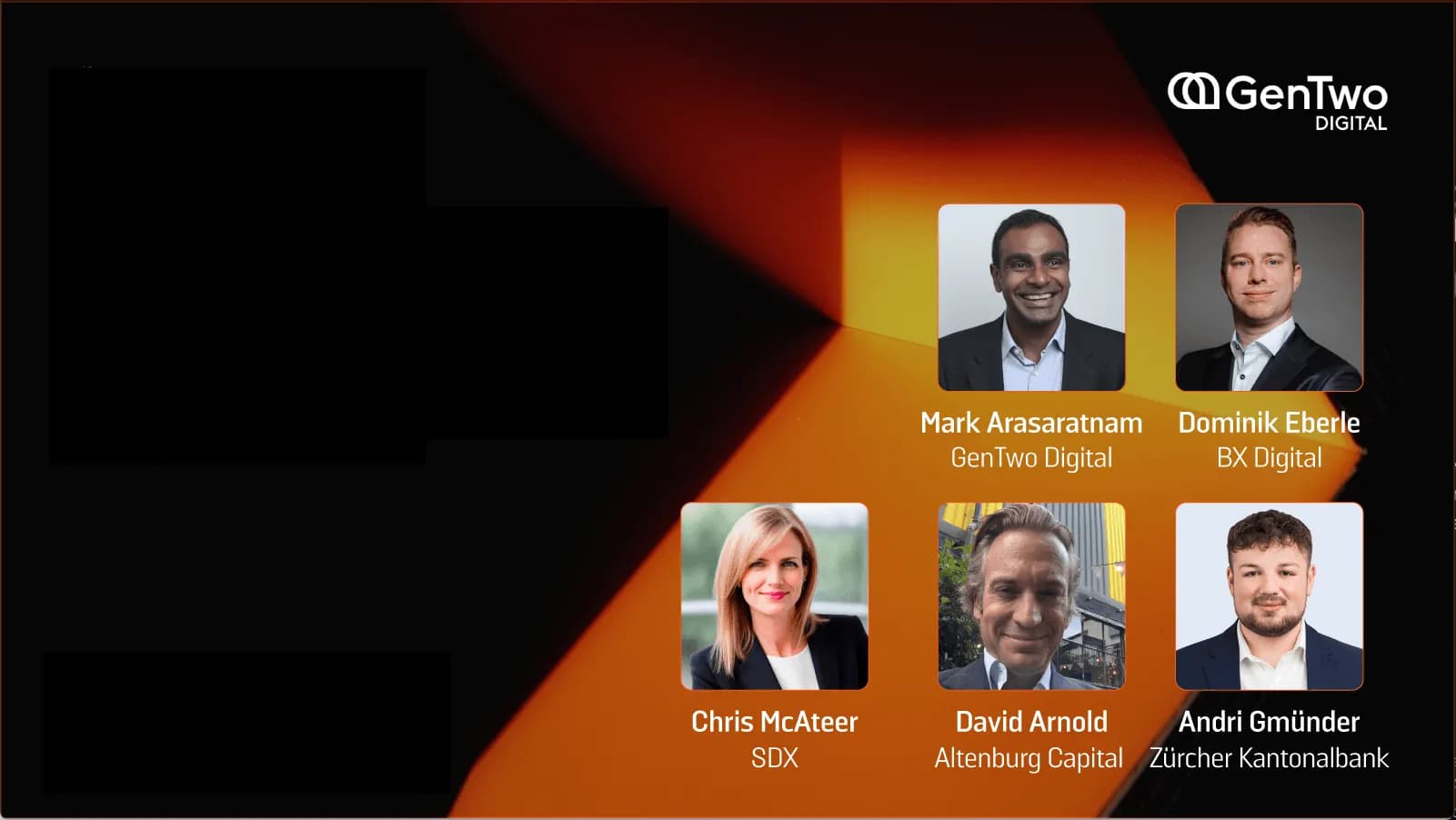
GenTwo Digital launched its new digital assets platform at a panel event hosted by GenTwo and the Crypto Valley Association (CVA). The discussion, moderated by Chris McAteer of SIX, featured Mark Arasaratnam of GenTwo Digital, David Arnold of Altenburg Capital, Andri Gmünder of Zürcher Kantonalbank, and Dominik Eberle of BX Digital.
The Core Problem: Liquidity Without Harmonization
The panel quickly centered on a fundamental tension: tokenization technology works, but regulatory fragmentation across jurisdictions means the network effects that would make it transformative remain out of reach. David Arnold articulated the Swiss advantage—the ability to bridge traditional finance and DeFi liquidity while maintaining regulatory clarity.
Mark Arasaratnam emphasized that despite technological advances, tokenization still must conform to a century of securities law. "GenTwo for tokenization should not need to exist," he noted, "but there's no harmonization." The company's role creating CUSIPs and ISINs for tokenized assets reflects the persistence of traditional financial infrastructure as the only truly global passport for securities.
The Swiss Franc Stablecoin Debate
A contentious exchange emerged over whether Switzerland needs its own stablecoin. Andri Gmünder argued that the absence of tokenized Swiss Franc—whether as a stablecoin or tokenized deposit—stifles innovation, making him "very bearish about Swiss tokenization in the next 12 months."
Arasaratnam countered that Switzerland's strong currency and efficient payment systems make a stablecoin unnecessary and potentially problematic from a monetary policy perspective. The debate highlighted a deeper question: should financial infrastructure serve innovation or protect economic stability?
Building Infrastructure vs. Creating Demand
Dominik Eberle of BX Digital outlined the three-year journey to launch Switzerland's first DLT trading facility, describing regulation as "more of a stamina thing" than an insurmountable barrier. The harder challenge, he argued, lies in operational processes—dividends, KYC, voting rights—that the ecosystem hasn't fully solved. "Just put it on a blockchain, just make a smart contract and everything works, right?" he said. "That's exactly, now I think the biggest obstacle."
The panel identified Nasdaq's recent SEC filing to trade tokenized securities on the same order book as traditional shares as potentially transformative, offering instant liquidity by bridging both worlds.
What Needs to Change
When asked for their wishlists, the panelists' answers revealed different perspectives but a common theme:
- Andri Gmünder: Tokenized money and access to traditional finance liquidity for tokenized assets
- David Arnold: Harmonization of stablecoin treatment across jurisdictions
- Dominik Eberle: Removal of regulatory limits on structured products for DLT trading facilities
- Mark Arasaratnam: Greater dialogue between governments and innovators, pointing to recent U.S. regulatory clarity on stablecoins as progress
The Bigger Picture
The audience Q&A surfaced broader themes: DeFi creating new financial primitives that traditional finance cannot replicate; Dubai's ambitious blockchain-based land registry as a model; and the accelerating de-dollarization trend that may make alternative stablecoins increasingly relevant.
The event underscored GenTwo Digital's positioning at the intersection of traditional securitization and digital assets—not disrupting securities law, but making it work on new rails. As tokenization remains more experiment than revolution, companies that can navigate both worlds may be best positioned for whatever comes next.