The Assetizer · 21 October 2024
Banking's AI Revolution: Promise, Peril, and the Path Forward
At a recent event in our Zurich office, industry leaders gathered to dissect the transformative impact of artificial intelligence on banking. The consensus? AI is not just coming; it's already here, reshaping everything from customer service to risk management.
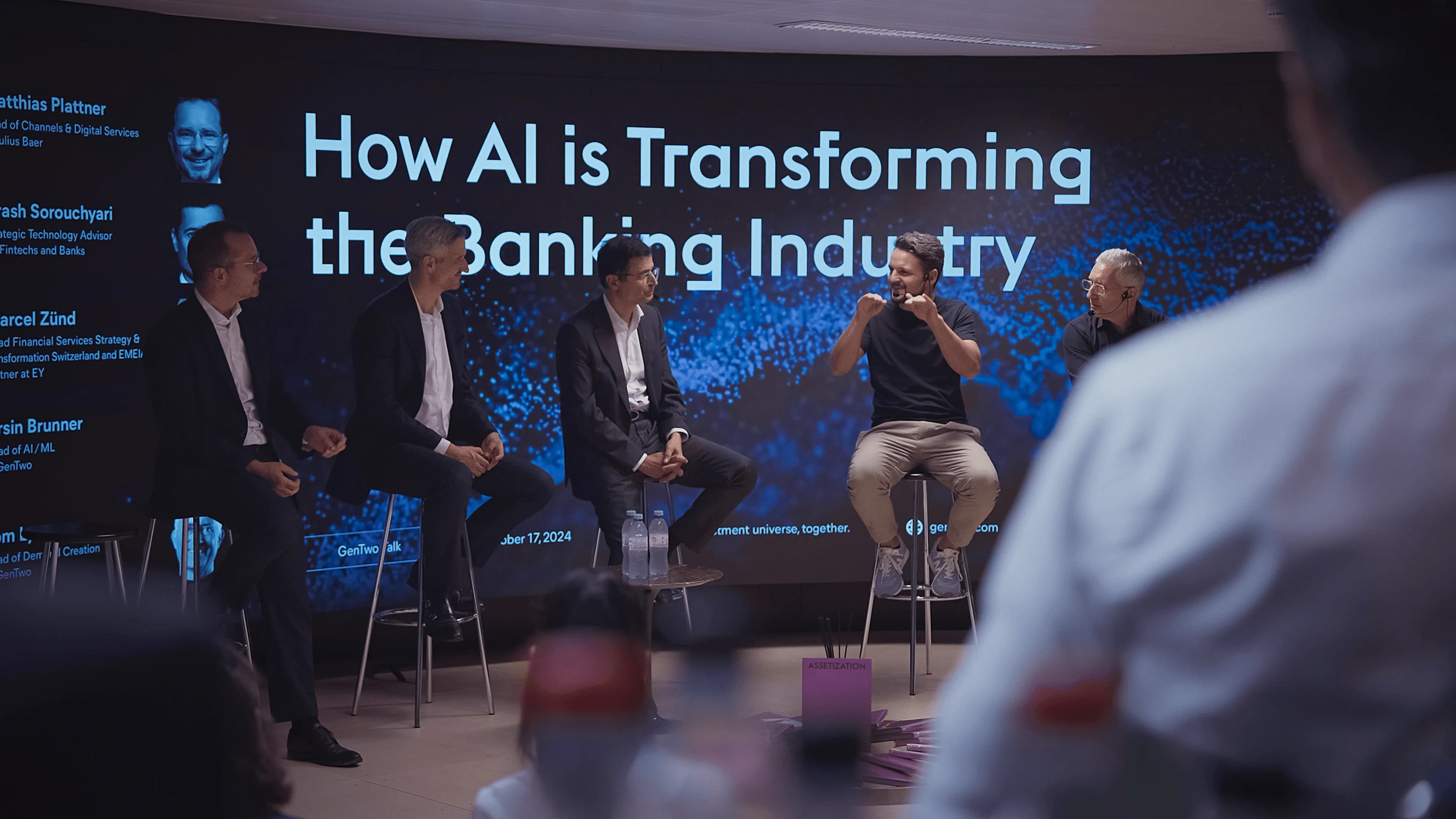
The future of banking is artificial, but perhaps not in the way many imagine. As industry experts convened at GenTwo's Zurich offices on October 12 to discuss the AI revolution in finance, it became clear that the technology's impact is as nuanced as it is profound. Far from the dystopian visions of robots replacing bankers en masse, the reality is a subtle transformation that touches every aspect of the industry.
Here are some highlights from the conversation:
Portfolios and algorithms: An uneasy alliance
Panelists all agreed that the automation of routine tasks, long heralded as AI's low-hanging fruit, is indeed well underway in the banking sector. But it's in the realm of decision-making where things get interesting—and complicated.
Take portfolio management. While AI excels at analyzing vast swathes of data to identify investment opportunities, the human touch remains crucial. Panelists concurred that fully AI-driven portfolio management systems are still a distant prospect. The consensus was clear: AI should complement, not replace, human expertise.
This human-AI collaboration extends to product creation and client servicing. Machine learning algorithms are being deployed to identify market gaps and personalize offerings, while chatbots and virtual assistants are becoming increasingly adept at handling complex queries and even detecting emotional cues. Yet there's a growing recognition that these tools should augment, not supplant, human interaction. Several panelists emphasized a philosophy of using AI for administrative tasks, freeing humans to focus on innovation and relationship-building.
Navigating the AI minefield
As banks rush to embrace AI, they must navigate a minefield of risks. The specter of job displacement looms large, particularly for junior and back-office roles. While new positions are emerging, there's a pressing need for widespread upskilling across the industry, panelists said.
Moreover, as AI systems become more integral to decision-making processes, the potential for systemic risk grows. Regulators are scrambling to keep pace, grappling with questions of accountability and transparency in AI-driven decisions. The risks are considerable, prompting calls for robust AI governance frameworks. A thorny question emerged during the discussion: who is accountable when AI makes a mistake? The panelists argued it's the individual who deploys the AI – the “human in the loop” – who is ultimately responsible. But the question remains largely unresolved at the moment.
Data: The new gold (and its pirates)
Data, the lifeblood of AI systems, presents its own challenges. Banks sit on vast troves of sensitive information, making them attractive targets for cyberattacks. As AI systems become more complex, ensuring data privacy and security becomes ever more critical—and difficult, panelists warned.
A unique challenge for banks, several panelists noted, is the accessibility of their data, often trapped in legacy core banking systems. Those who can unlock this data faster may gain a significant competitive advantage.
However, it's not all doom and gloom. Some experts on the panel argued that AI tools like ChatGPT haven't replaced jobs as predicted, but instead have opened new avenues for understanding and utilizing unstructured data.
The prevailing mood among the panelists was one of cautious optimism. AI is seen not as a replacement for human expertise, but as a tool to augment it, allowing bankers to focus on their core strengths: understanding client needs, navigating complex financial landscapes, and building trust.
The concept of a fully automated "push-button bank" was widely dismissed by the panel. Instead, the focus was on "augmented banking", where AI enhances human capabilities rather than replacing them. This shift will require careful implementation and comprehensive training programs, as the panelists acknowledged that rapid adaptation is not a human strong suit.
As the discussion concluded, it was clear that the AI revolution in banking is unfolding now. Success will depend not just on technological advancements, but on the wisdom and foresight of those steering the ship. In the world of finance, as in so many others, the human element remains irreplaceable—even as it evolves in the age of AI, the panelists unanimously agreed.
Panelists
- Matthias Plattner, Head Channels & Digital Services, Julius Bär
- Arash Sorouchyari, Strategic Technology Advisor for FinTech's and Banks
- Marcel Zünd, Head of Financial Services Business Consulting, EY
- Ursin Brunner, Head of AI / ML, GenTwo
- Tom Lyons, Head of Demand Creation, GenTwo (Moderator)