The Assetizer · 15 May 2025
AssetRush 2025: Why Infrastructure, Not Assets, May Define the Next Wave of Finance
This year's AssetRush conference revealed a striking shift: as tokenization and digital assets become everyday tools, the critical battleground isn't new asset classes, it's who builds the best pipes to connect them. The winners might not be who you expect.
This article is part of The Assetizer, GenTwo's thought leadership platform.
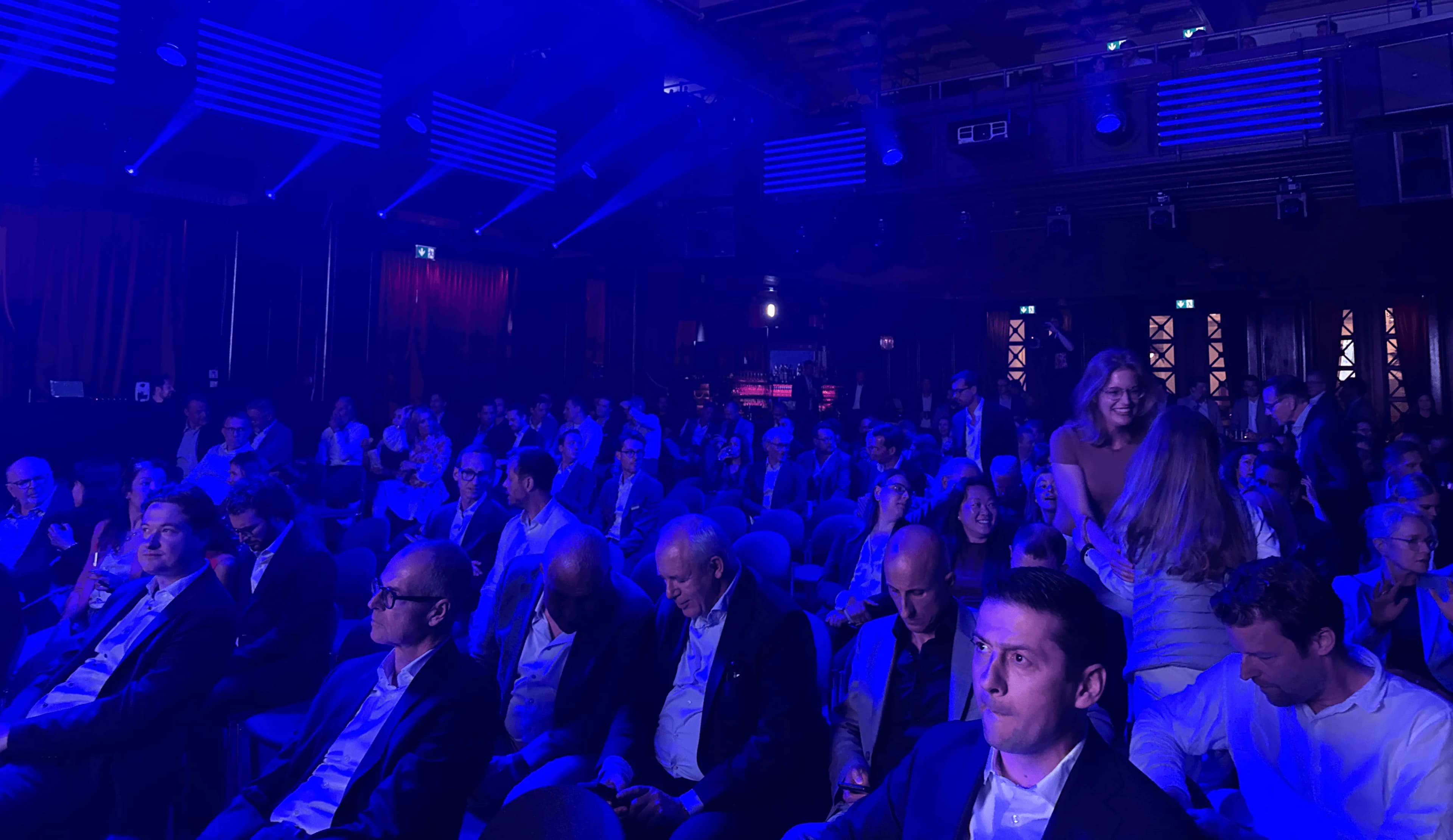
The GenTwo-powered AssetRush conference has long showcased the cutting edge of the Swiss assetization and alternative assets scene. This year's event, which took place yesterday (May 14), was no exception.
While almost all events bill themselves as "different" or "unique", as a frequenter of such do's, I can tell you this one is.
For one, it takes place in a nightclub. For another, speakers get exactly five minutes to make their point before a merciless buzzer cuts them off mid-sentence. The format encourages brevity, which is a virtue in most contexts. (Advice which – I know, I know – I don't necessarily follow myself in this newsletter.)
Short need not mean cursory, and I personally thought this year's edition had the strongest consistent level of talks that I've seen yet.
Below are my – definitely subjective – top 3 takeaways.

Tom's Top 3 AssetRush Takeaways
Tokenization is becoming part of the plumbing, finally. When I was in blockchain the mantra was "we will know we have arrived when nobody knows we're there" – meaning when blockchain becomes invisible infrastructure. AssetRush provided ample evidence that this is happening.
One global bank showcased pre-IPO share tokenization with a Swiss digital asset exchange. Another won an AssetAward for tokenizing a money market fund. A local investment boutique arranged direct USDC subscription into a certificate and its underlying fund in "a few hours" instead of days.
Nobody seemed particularly impressed – merely another operational improvement, like faster clearing. The technology is disappearing into the walls and floors of finance, exactly where it belongs.
Ditto digital assets. Digital assets were a major theme this year too. (Unlike last year, as one speaker noted, when everyone was talking about AI – which made me chuckle.)
Several speakers showcased products that would have seemed outlandish just a few years ago: structured crypto products following the barrier-reverse convertible model, crypto certificates inspired by Europe's Xetra Gold framework, and yield-enhancing strategies that extract returns from crypto volatility. The AssetAwards recognized innovations in Ethereum staking at an august Swiss institution.
Our own Mark Arasaratnam from GenTwo Digital outlined how we're addressing the "broken access" problem in digital assets through white-labeled AMCs and structured products at scale. GenTwo Digital has spent years building the bridge between traditional finance and DeFi, simplifying compliance, taming complexity, and solving custody challenges – work taking on new significance with the current digital asset renaissance.
Alternative assets need better infrastructure – and will get it. Private markets are growing twice as fast as public ones and could potentially generate billions in annual profits for wealth managers. But the operational challenges are daunting.
Documentation burdens, custody fragmentation, settlement times stretching to 6-9 weeks, underdeveloped secondary markets, and client conversations around illiquidity all present hurdles. When firms aim to democratize these assets across thousands of clients, spreadsheets and manual reconciliation simply cannot cope.
Solutions are emerging. AMCs are simplifying access by providing familiar wrappers with ISINs that fit into existing systems. Tokenization shows promise for reducing settlement cycles to hours. Purpose-built platforms are tackling documentation through digitization.
Everyone wants the returns. Few seem keen on fixing the plumbing. But infrastructure providers tackling these operational challenges might ultimately deliver more value than the asset managers themselves.
Much other food for thought
There was much else besides, themes which will certainly inform future posts.
For example democratization, a main theme of The Assetizer. As one speaker said, everyone in Fintech likes to talk about democratization; fewer are actually doing it. Genuine democratization requires focus on transparency and accessibility rather than just distribution. "Selling more of something doesn't democratize it. China sells a lot of stuff. It is not a democracy." (Quote of the evening, in my opinion.)
There was talk of an ESG "rebranding" narrative – while ESG-labeled fund flows face political headwinds, the underlying activities continue under different labels like "supply chain management" and "compliance-driven measures," with CFOs maintaining the same budget lines but housing them in departments with less charged terminology. The good work continues.
Last but not least, I was pleased that Prof. Kean Birch from York University in Canada – who has become a friend of GenTwo's through our exchanges over his work on assetization – made the trip to give us the academic perspective. His reminder that assets are created, not discovered – and that their design embeds certain interests for the long term – is a perspective the industry needs. For those intrigued, Kean and I recorded a podcast while he was in Zurich that I'll be releasing soon.
Until next time, I'll be watching to see which pipes get fixed first.
Best,
Tom Lyons, Head of Communications and Content, GenTwo